A Chiang Mai temple, not the Chiang Saen namesake
The Chiang Mai temple is at 103 Phra Pokklao Road inside the Old City. Another important Wat Chedi Luang stands in Chiang Saen, Chiang Rai province. Check that your map or driver has the Chiang Mai address; the two share a familiar name but are not interchangeable places on one city walk.
Phra Pokklao Road provides a useful point of orientation for the main approach. TAT lists walking or cycling within the Old City and songthaew access from elsewhere. If you arrive from a hotel outside the walls, distinguish that transfer from the walk between central temples. No single journey time can describe every accommodation base or pickup point.
Look around the base before looking for the top
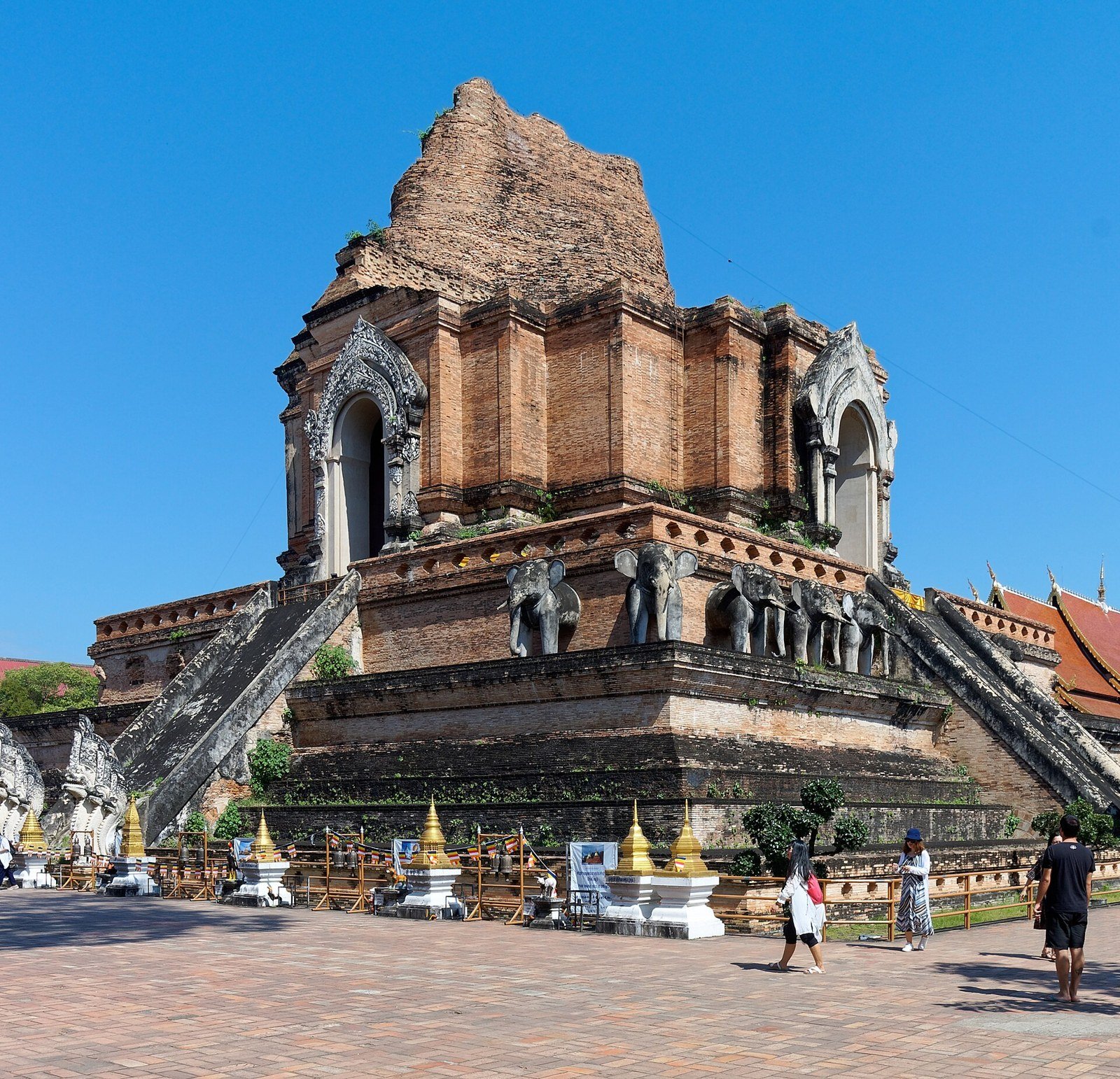
The Sirindhorn Anthropology Centre describes a Lanna prasat-type chedi built of brick and stucco, with a large square terrace and elephant figures around the upper part of the base. Naga approaches rise on the four sides towards niches containing Buddha images. The lost upper structure is part of what you are seeing: this is not a complete spire hidden behind a modern viewing angle.
The art-historical account links the collapse to the earthquake of 1545 and records later archaeological investigation and restoration. Surviving fabric and restored decoration need to be understood together. Walk around the allowed perimeter to compare the faces, rather than assuming a single front view explains the entire structure. Do not climb a ramp or cross a barrier because it resembles a staircase.
The northern and other faces have not all survived in the same condition. Conservation work reconstructed elements after the loss of much original decoration. That distinction is a reason to look carefully, not a reason to dismiss the temple as a replica. The mass, layout and continuing religious role remain central to a visit.
The history is longer than one founding date
TAT associates the temple with King Saen Muang Ma and the late fourteenth century. The anthropology record describes construction and enlargement across several reigns, with major work under King Tilokarat. A short visit gains more from recognising those successive stages than from trying to attach every brick to one year.
The chedi once housed the Emerald Buddha, now enshrined at Wat Phra Kaew in Bangkok. That historical connection does not mean the Bangkok image is here today. It helps explain the temple’s place in a wider religious history, while the Buddha images and worship you encounter in Chiang Mai belong to the present compound.
The damaged structure should not be read as its original full height. Its broad base and relationship with the surrounding halls are more useful to a ground-level visit than imagining a complete spire. Keep those two views separate: the historic monument described in chronicles and the surviving, conserved form that is accessible today.
Step into the main hall when access permits
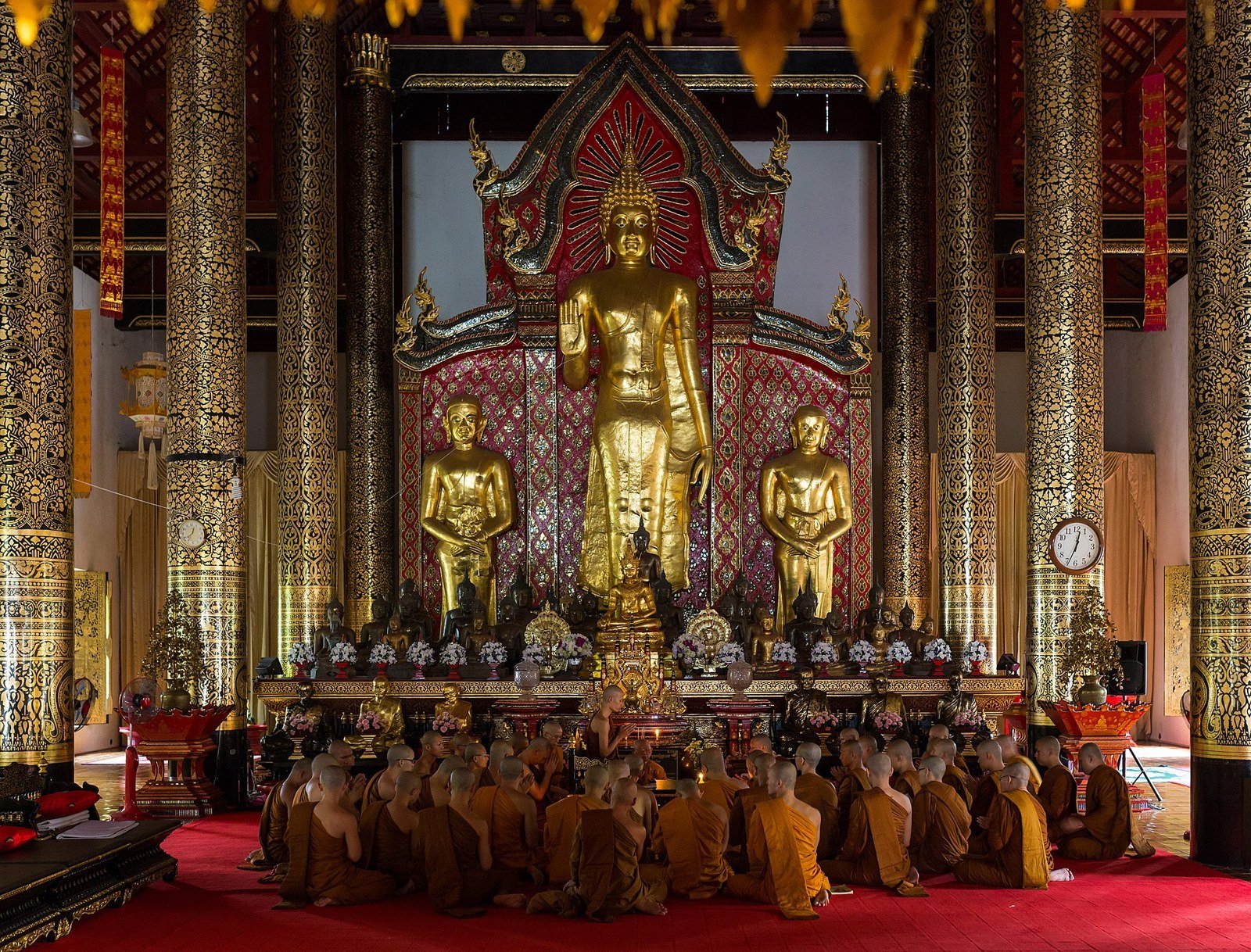
The main vihara contains a standing bronze Buddha image. The anthropology centre identifies the raised-hand gesture as Abhaya Mudra and describes a combination of Lanna sculptural characteristics: a rounded face and substantial body alongside the flame-shaped halo and robe treatment. Looking at the face, hands and robe provides a different kind of detail from the large chedi outside.
The hall is a place of worship. Remove shoes at the indicated point, enter quietly and keep an unobstructed path for worshippers. If people are kneeling, choose a position that does not turn them into the foreground of your photograph. A hall closed for a ceremony is a reason to adjust the visit, not to look for another private entrance.
The temple also has the Inthakhin city pillar and associated observances. Thailand’s government tourism information describes the flower-offering ritual here. The city-pillar shrine has its own religious access restrictions, including a restriction on women entering that particular building. This does not prohibit women from visiting the wider temple compound; follow the signs for the specific shrine rather than confusing one restriction with the entire site.
Use the hours as a planning reference
TAT’s Japanese information lists 08:00–22:00 and a 50-baht entry charge. The national directory displays a different time range, and current access to individual buildings can differ from access to the grounds. Read the entrance notice before paying and check which areas are available that day. A published late closing time is not a promise that the main hall or city-pillar shrine remains open all evening.
For an architecture visit, allow enough daylight to compare the brickwork, elephant figures and different sides of the chedi. Avoid tying the visit to an unverified monk-chat timetable or assuming an annual festival is under way. Those activities have their own arrangements and should be confirmed when they are central to your plans.
Make an Old City comparison, not a northern-province dash
Wat Phra Singh is another planned temple within the Old City, making a useful companion for Lai Kham’s paintings and gold-on-red decoration. A suggested sequence is Chedi Luang’s large exterior forms followed by Phra Singh’s smaller-scale art, or the reverse if current worship affects access. It is a viewing suggestion rather than a timed tour.
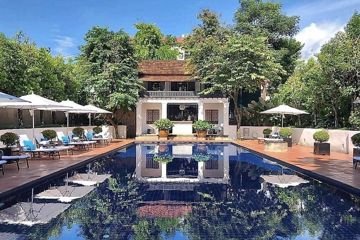
Choose accommodation inside or close to the Old City if you want these central temple visits to shape your day. A riverside or western-city hotel creates a different starting point and may still work with transport. Lampang, Lamphun, Chiang Rai and Nan are separate travel bases in this collection, not nearby stops to append casually after a Chiang Mai temple walk.
Sources & visiting information
Sources checked on 29 October 2026. The guide identifies limits or conflicting visiting details where they affect the plan.
- Tourism Authority of Thailand — Wat Chedi Luang
- Sirindhorn Anthropology Centre — Chedi Luang architecture
- Sirindhorn Anthropology Centre — main standing Buddha
- Thailand Tourism Directory — Chedi Luang Chiang Mai
- Thailand.go.th — Inthakhin flower offering
- TAT Newsroom — sacred-site etiquette
- Chiang Mai Public Relations Office — city-pillar observances and shrine restriction