Use the Chiang Mai address
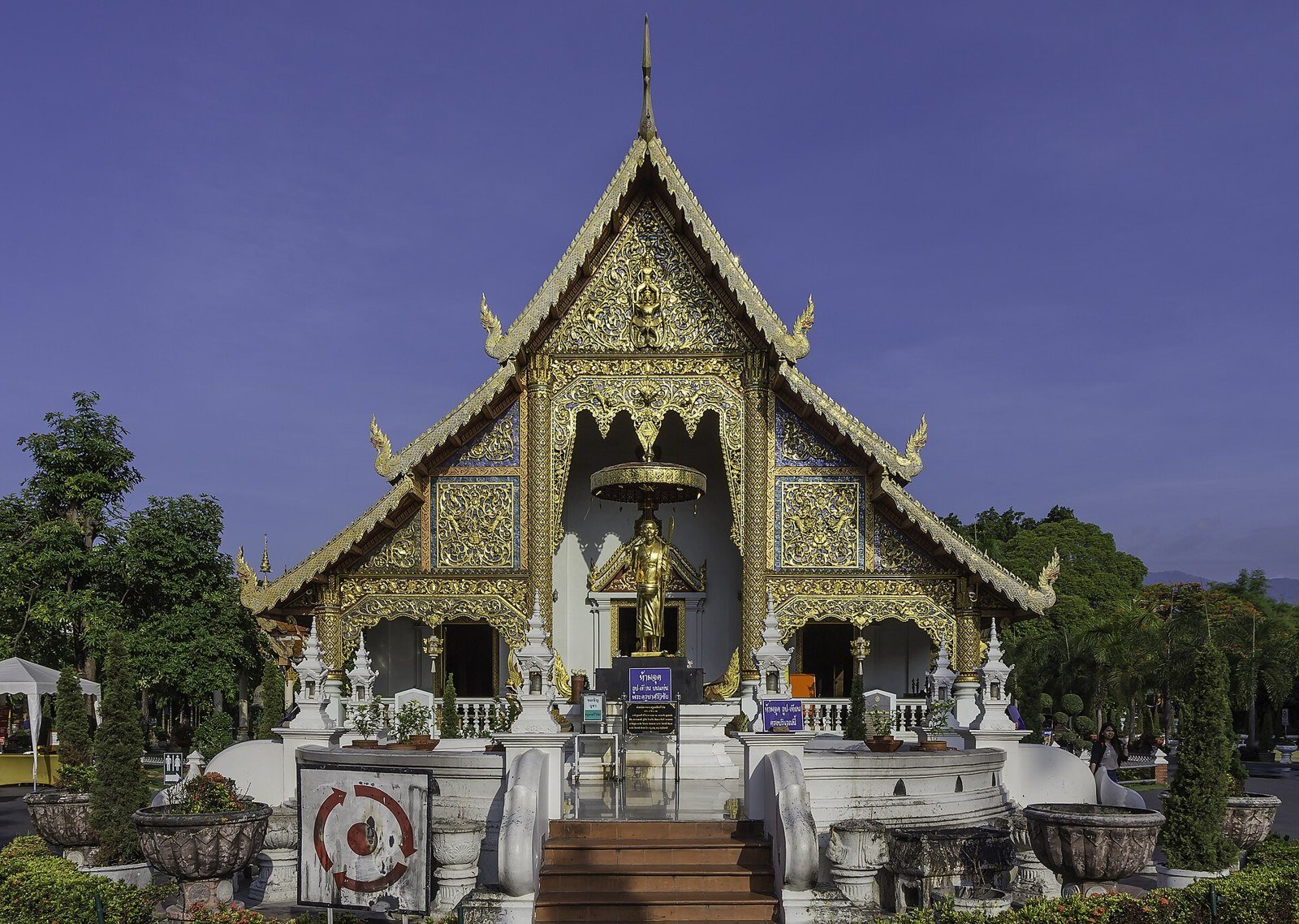
This is Wat Phra Singh Woramahawihan at 2 Sam Lan Road in Chiang Mai’s Old City. There is also a Wat Phra Singh in Chiang Rai, so check the city as well as the temple name when arranging a vehicle or opening a map. For this visit, the address and the Lai Kham hall are the useful identifiers.
TAT describes the Old City as suitable for exploring on foot or by bicycle and also lists songthaew access. That does not make every hotel labelled Chiang Mai a walking base. If your accommodation is by the river, in Nimman or outside the city, plan the journey to the Old City first. Start the temple visit at its public entrance rather than following a map pin through a residential or monks’ area.
Find Lai Kham before treating the visit as complete
The Phra Buddha Sihing, also called Phra Singh, is housed in Wihan Lai Kham. TAT identifies this image and the hall’s murals as major reasons to visit. The main assembly hall, chedi, ordination hall and scripture library belong to the same compound, but they offer different things to look at. A photograph from the entrance will not show you the painting that gives Lai Kham its importance.
The national tourism directory describes naga and lion figures at the approach to Lai Kham, with gilded patterns on a red background inside. These are useful orientation details when several halls are open. Follow the signs and current access instructions, and wait if worship is taking place. Entry to a compound should not be taken as permission to walk through every doorway.
Read the painted walls as separate stories
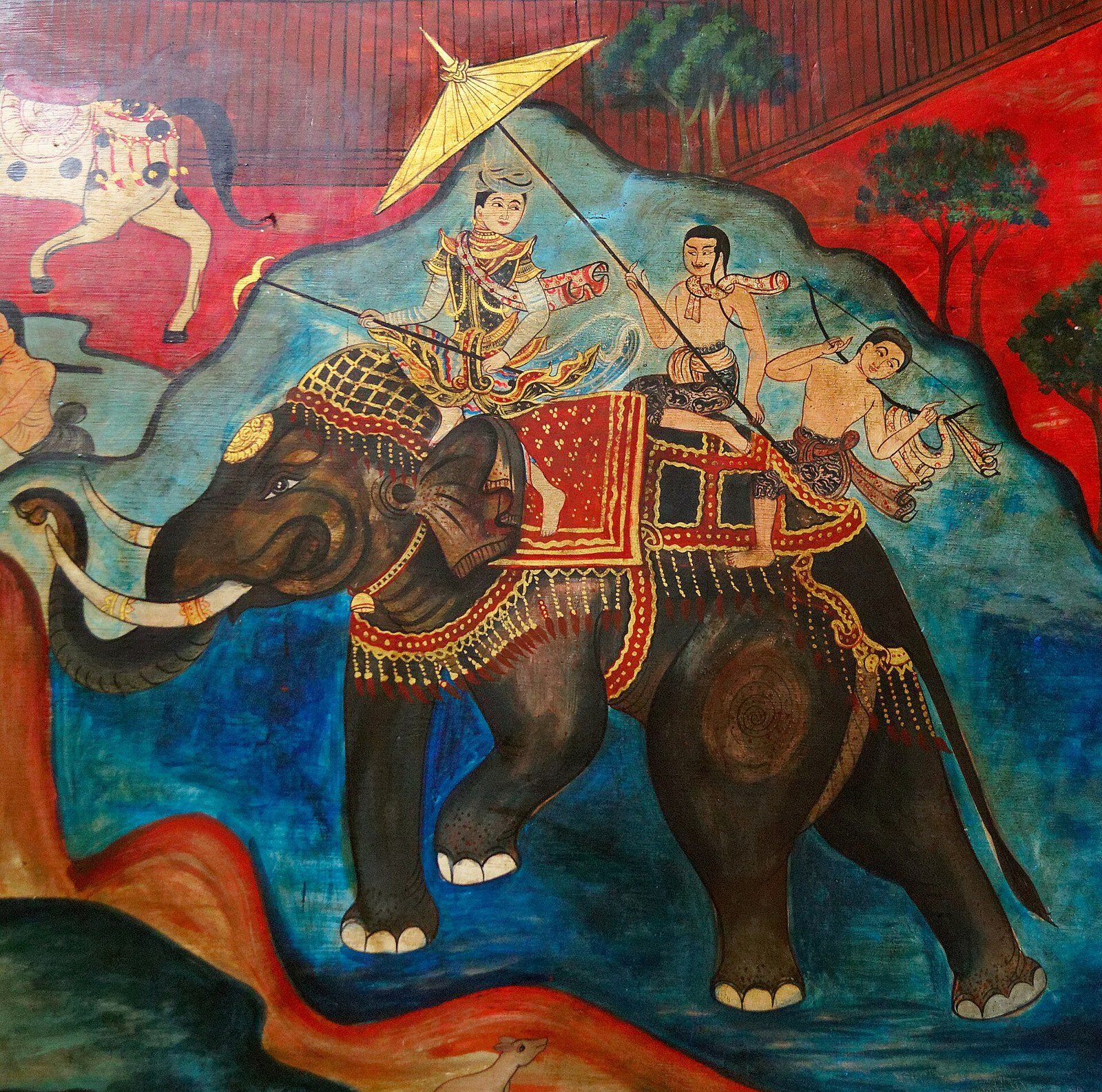
The Sirindhorn Anthropology Centre identifies three main components of the interior decoration: gold work behind the principal image, the Suwannahong narrative on the south wall and Sang Thong on the north wall. The latter two stories come from the Pannasa Jataka tradition. Look at one wall at a time instead of trying to turn the entire interior into one wide photograph.
The gilded architectural form behind the Buddha image represents a Lanna-style palace or shrine. The art record also identifies Chinese-related decorative motifs, including clouds and dragons. These details make the hall a useful place to notice how visual traditions meet, rather than imagining Lanna art as one fixed pattern repeated unchanged.
Give the paintings space. Stand where you can see without touching a wall or leaning against a decorated surface. Permission to enter the hall does not establish permission for flash, tripods or close photography; follow the instructions in the building. If another visitor is worshipping in front of a section you want to study, return to it after looking elsewhere.
See the compound around the paintings
The scripture library, or ho trai, has a masonry lower section and a timber upper section. The tourism directory draws attention to its stucco figures and mythical creatures. Looking at the exterior is a useful contrast to the painted interior of Lai Kham. Do not assume that the upper library is open simply because the building is visible from the courtyard.
The large chedi and main hall add another scale to the visit. Their size can dominate your first impression, while carved and painted details require closer attention. A practical order is to orient yourself in the open compound, visit Lai Kham when access permits, then return to the other buildings. This is a suggested viewing order, not a compulsory route or a promise that every hall will be open.
The temple’s long history includes repair and rebuilding. The anthropology record discusses chronicle accounts of its early foundation and later major work; TAT associates the foundation with King Pha Yu in 1345. Treat the site as a living religious complex, not a collection in which every visible surface survives unchanged from the founding period.
Allow for worship, admission and different published hours
TAT’s Japanese visitor page lists 07:00–22:00 and a 50-baht charge. The national tourism directory has a no-charge field and a differently displayed time range. These accounts do not establish that all halls share the same opening hours or that every visitor follows the same ticket arrangement. Check the entrance notice and any separate hall instructions; do not plan an interior art visit around the latest published closing time.
For visitors interested primarily in the paintings, daytime access to Lai Kham matters more than whether the grounds are lit late in the evening. A later walk past a chedi is a different experience from studying an accessible interior. No current promise of unrestricted evening hall entry is made here.
Cover shoulders and knees, remove shoes where indicated, and leave the worship space clear. The Phra Buddha Sihing is important to local religious life and Songkran observances. TAT describes its ceremonial procession in April; the dates and route of a particular year’s events should be checked separately rather than inferred from a normal sightseeing schedule.
Pair painting with Chedi Luang, then choose your base
Wat Phra Singh and Wat Chedi Luang are both within Chiang Mai’s Old City. Pair them for a focused day comparing painted and carved detail with monumental brick architecture. Use the actual streets and crossings between them; a compact city setting does not remove traffic or guarantee a continuous shaded pavement. There is no fixed walking time promised here.
An Old City hotel is a practical base for returning to these temples without making every visit a cross-city transfer. Hotels outside the walls can still suit the trip, but their value depends on the location and transport you prefer. Keep Doi Suthep for a separate road journey if you want enough attention for the murals, rather than compressing both settings into a rushed checklist.
Sources & visiting information
Sources checked on 29 October 2026. The guide identifies limits or conflicting visiting details where they affect the plan.