Plan the mountain journey before the climb
The temple lies west of Chiang Mai on Doi Suthep. The Sirindhorn Anthropology Centre documents the road approach via Highway 1004 and Si Wichai Road. This is a road excursion from the city, rather than an extension of the Old City temple walk. Arrange a car or songthaew journey to the temple entrance and decide how you will return before leaving the city.
A shared songthaew and a privately hired vehicle are different arrangements. A shared fare does not automatically include waiting, intermediate stops or a late return. Agree those points with the operator instead of treating an advertised one-way price as the cost of the whole visit. No fixed fare or driving time is promised here; the mountain road, pickup location and service you choose affect the journey.
Keep a mountain visit distinct from a forest hike. Directions to the temple by road do not establish whether a national-park trail is open, requires a ticket or is appropriate for your group. The stairs at the temple are also not the same route as a walk from the city through the forest. A temple-only plan is the simpler choice when transport, rather than hiking, is the purpose of the day.
Staircase or lift: choose for your group
The Tourism Authority of Thailand describes more than 300 steps on the naga staircase; its Japanese visitor page specifies 306. The decorated serpent balustrades make the ascent part of the architecture, but there is no need to make climbing them a test of whether you have visited properly. Choose the paid lift if a long staircase would use energy you want to keep for the upper compound.
Lift access is not proof of an entirely step-free visit. Confirm the route between the vehicle drop-off, lift entrance, ticket point and the areas you want to see if someone uses a wheelchair or has difficulty with steps. The available visitor information does not establish every gradient, threshold or lift dimension. A companion who can walk the stairs and one who uses the lift should arrange a meeting place at the top.
Look at the chedi as a sacred centre
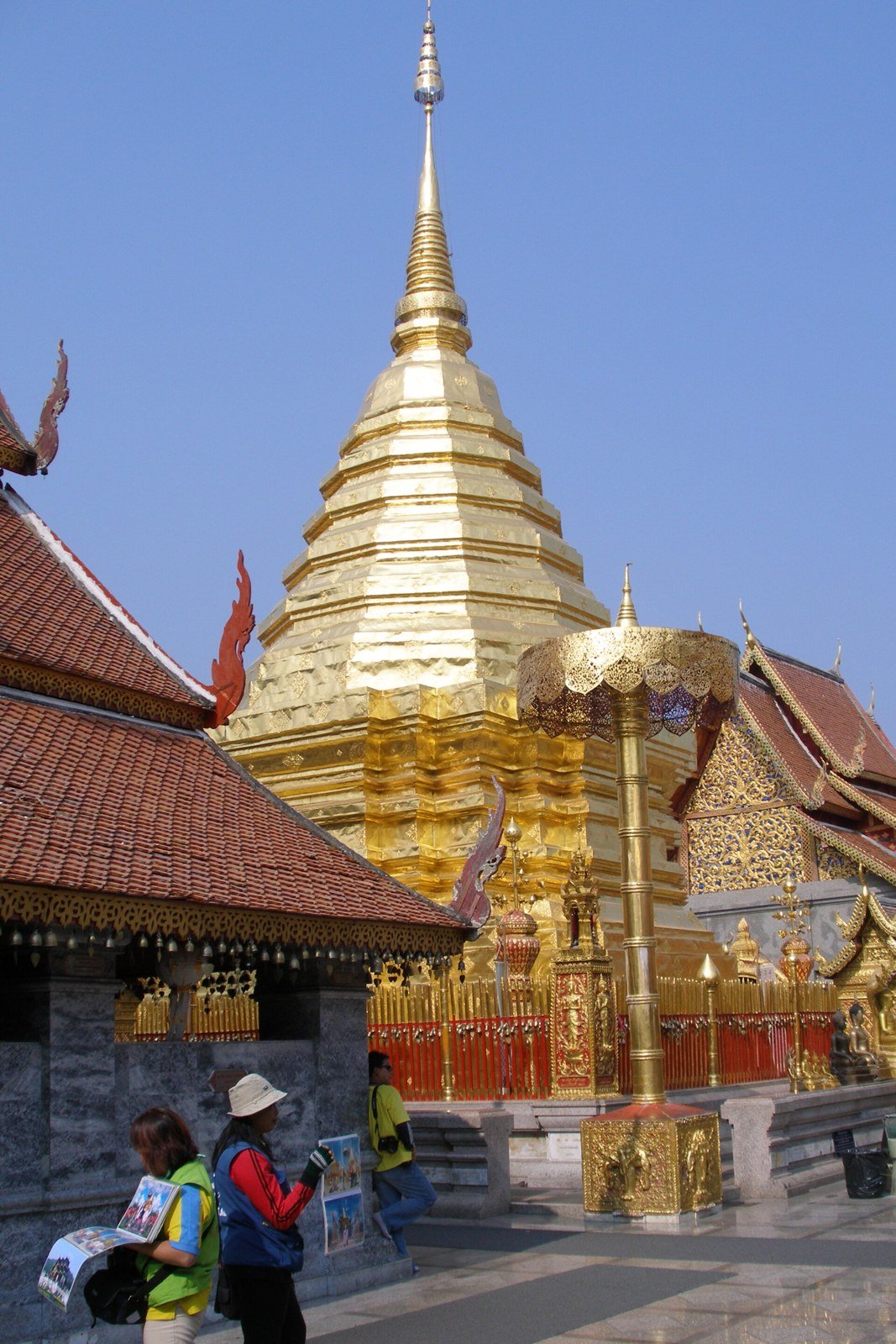
The golden chedi holds Buddha relics and remains a focus of worship. TAT describes devotees moving clockwise around it with offerings. Visitors can watch respectfully without joining a ritual they do not understand, and should keep the route clear for people praying. This is a working religious place rather than a viewing platform with a temple attached.
The archaeology record places the temple in the reign of King Kue Na, while recording differing dates in historical accounts. It also describes repeated enlargement and restoration. You do not need to settle a disputed founding year to understand what is in front of you: the compound reflects continued patronage and religious use, with the chedi as its organising point.
Look beyond the gold surface. The documented architectural arrangement includes a square base, the many-sided upper structure, surrounding railings and ceremonial umbrellas at the corners. These details provide a useful contrast with the massive brick remains at Wat Chedi Luang and the painted interiors of Wat Phra Singh. They are three different ways to approach Lanna art, rather than three interchangeable photo stops.
Leave room for the terrace and ordinary worship
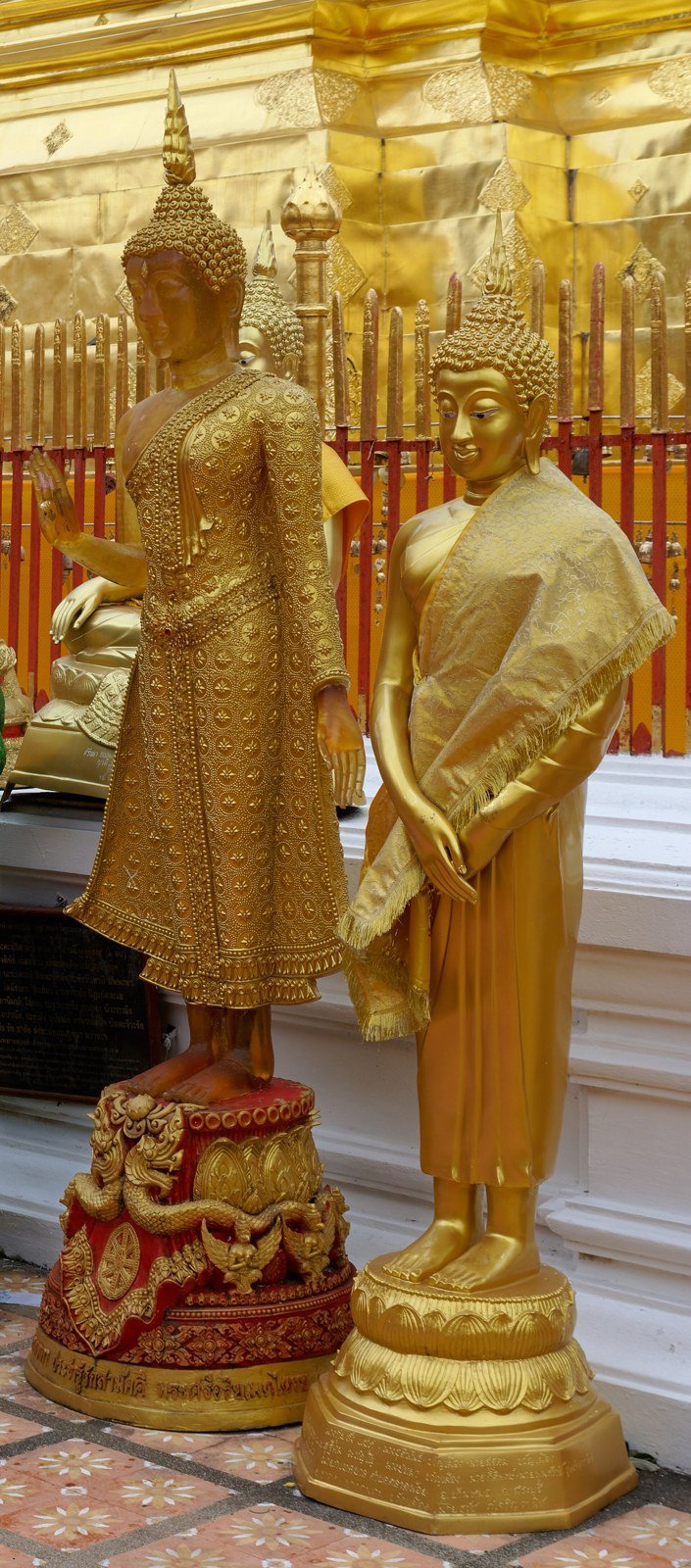
The terrace looks towards Chiang Mai, but a clear city panorama is not guaranteed. Avoid building the entire excursion around one photograph. The staircase, chedi and surrounding architecture still give the visit a purpose if distant details cannot be seen. Do not enter a roped-off or worship-only area to improve a camera angle.
Wear clothing covering shoulders and knees, and follow shoe-removal signs at religious areas. TAT asks photographers not to obstruct people praying or making donations. At Doi Suthep that matters particularly around the chedi, where circulation and worship share a confined space. Pause to one side for a photograph rather than stopping a procession.
Understand the published hours and charges
TAT’s Japanese page lists temple hours of 05:00–21:00, a 30-baht admission charge and a 50-baht cable-car charge, with the lift operating approximately 06:00–18:00. Its Thai page instead gives a 20-baht lift price without the same visitor distinction. These are published visitor figures, not a guarantee of the tariff or combined ticket you will be offered. Check the displayed admission and lift prices separately at the entrance.
The longer temple opening period should not be read as lift availability throughout the evening. If your plan depends on the lift, confirm its last service before going up. A daytime visit with a return vehicle already arranged avoids relying on both the latest possible entry and an unconfirmed descent service.
Choose a city base, then separate your temple days
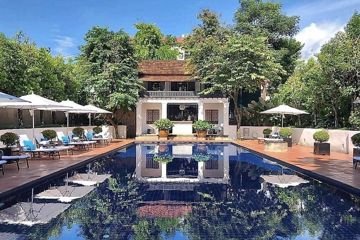
Chiang Mai’s Old City works for a trip combining Wat Phra Singh and Wat Chedi Luang with a separately arranged Doi Suthep excursion. A western-city hotel may be convenient for starting towards the mountain, but it is not a hotel at the temple. Compare the actual hotel location with your pickup arrangement rather than choosing solely because its name includes Doi Suthep.
For a slower itinerary, give the mountain temple its own outing and use another part of the trip for the Old City halls and murals. Adding Wat Umong also requires a separate access decision at the foot of the mountain; it should not be presented as a stop on the same staircase or an automatic extension of the lift journey.
Sources & visiting information
Sources checked on 29 October 2026. The guide identifies limits or conflicting visiting details where they affect the plan.