Make sure you have the forest temple
The address used by the Tourism Authority of Thailand is 135 Moo 10, Suthep, Chiang Mai. Use Wat Umong Suan Phutthatham when arranging transport. The fuller name helps distinguish this monastery from similarly named temples; a driver or map result showing only “Wat Umong” deserves a location check.
This is a western Chiang Mai outing rather than another stop within the old-city moat. A hotel in the old city can still serve the visit, but the final road journey needs to be planned. A western-city base may reduce backtracking if your itinerary also includes other Suthep-area visits.
Look for traces of painting, not a bright mural room
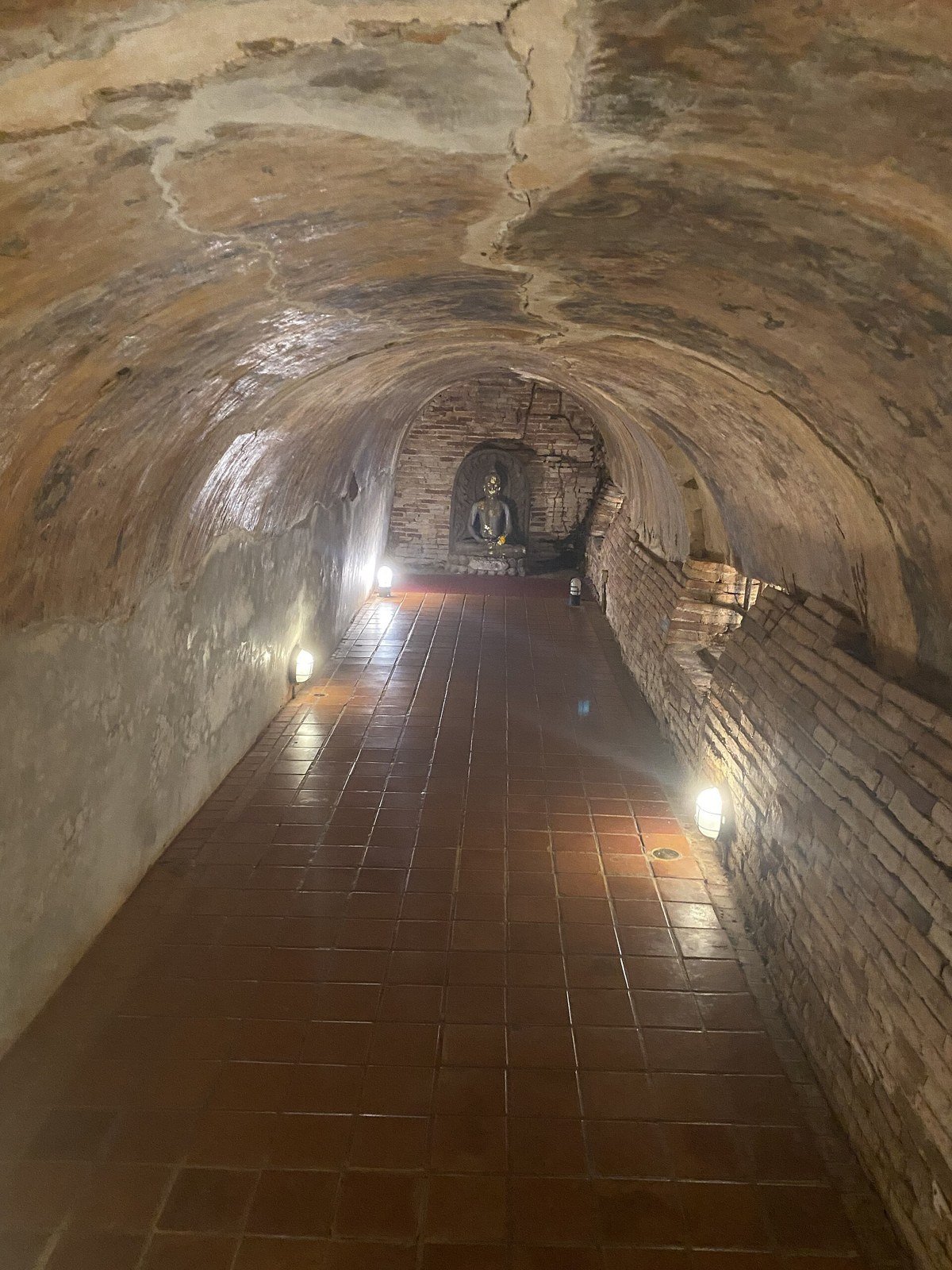
Suthep Municipality describes interconnected tunnels beside the chedi and surviving paintings on their curved ceilings. Much of the original painting has faded severely. The municipality explains that hand and digital copying have helped researchers make sense of details that are difficult to see on the original surface.
That distinction changes expectations. This is not a brightly restored gallery in which every painted figure will be obvious. The brick form, the relationship between the passages and the remaining decoration matter together. Look without touching the surfaces, and follow any restrictions on photography or on entry to a particular passage.
The chedi and the tunnels tell different parts of the story
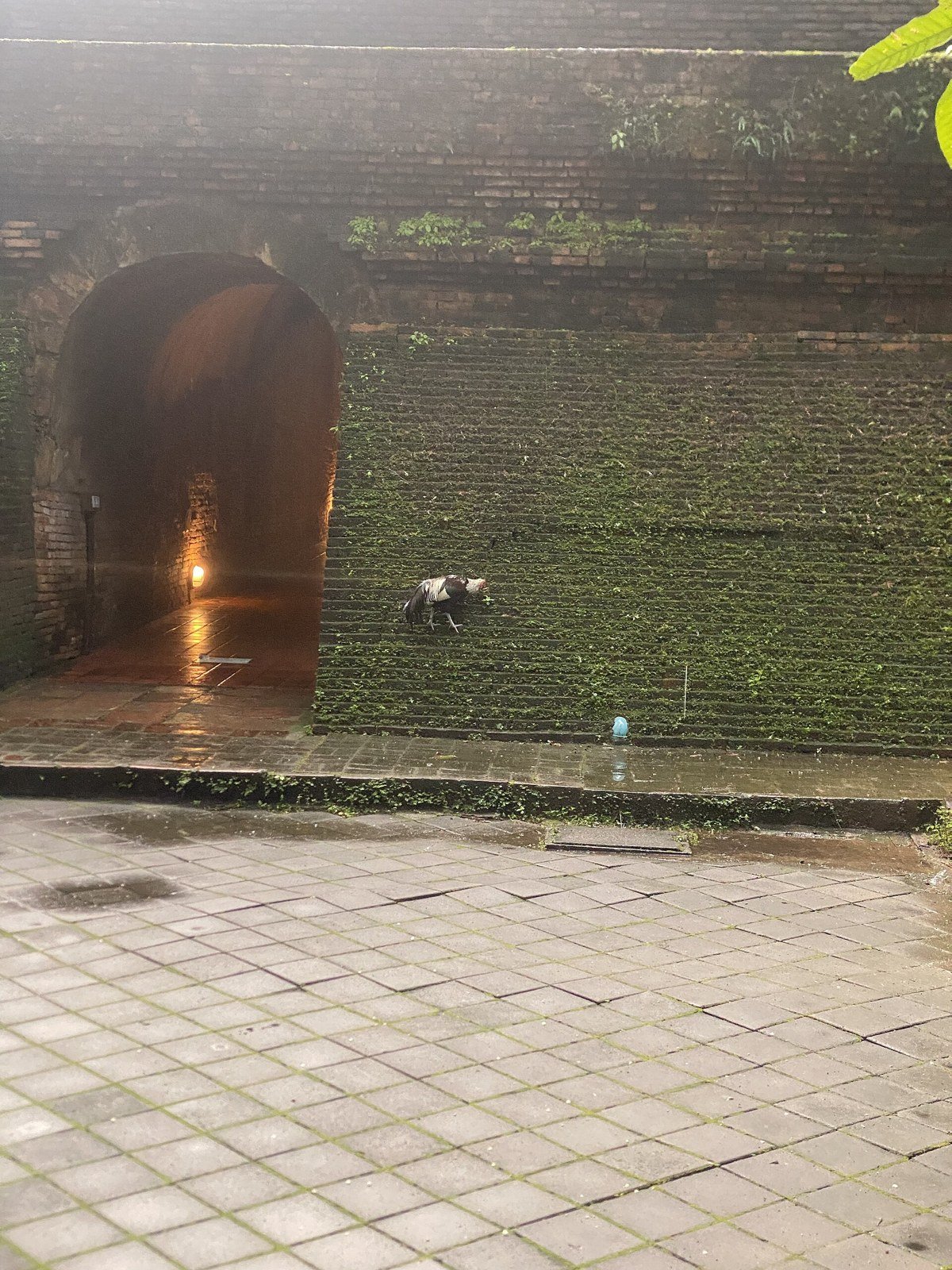
The national cultural-environment inventory associates Wat Umong with King Mangrai’s period and later tunnel construction under King Kue Na for meditation. It also identifies the Lanna-style chedi above the tunnel area. These are historical associations, not a claim that every visible brick dates from the same building campaign.
The chedi is worth considering separately from the passageways. A visitor interested chiefly in surviving interior decoration may spend most attention below, while someone comparing Lanna architectural forms will want to examine the exterior as well. Keep to the indicated public approaches rather than assuming that every stair or side path is a visitor route.
A sightseeing stop is not a meditation booking
TAT describes the present monastery as a meditation centre and mentions opportunities for visitors to participate in meditation. That does not establish a daily English-language drop-in session, an available residential place or a particular course starting time.
If a programme is the purpose of your journey, confirm its current arrangements directly before travelling. A general temple visit and a structured meditation stay involve different expectations. For a short architectural visit, avoid entering teaching or practice spaces simply because an activity appears to be taking place there.
Use daytime access as the practical default
TAT’s Japanese visitor page lists 05:00–20:00 and a 20-baht admission figure. It does not clearly separate the grounds from individual tunnel access or explain every fee category. Treat those published details as a planning reference, and follow the charge and access instructions displayed by the monastery when you arrive.
A daylight visit is the editorial preference for examining faded decoration and exterior form. It also avoids making the entire visit depend on a late opening assumption. No step-free tunnel or chedi route is promised here; anyone who needs to avoid steps or confined passages should confirm the particular areas they intend to enter.
Keep it distinct from the mountaintop temple
Wat Phra That Doi Suthep and Wat Umong are separate places. The former is the mountain temple, while Wat Umong is in the lower Suthep area. A west-side day can include both if the transport arrangement supports it, but neither the shared district name nor their religious character makes them one continuous temple visit.
For an art-focused itinerary, compare Wat Umong’s worn tunnel surfaces with the more elaborate interior work at Wat Phra Singh on another part of the day. This creates a useful contrast without requiring a rushed circuit through every Chiang Mai temple. Choose accommodation for the whole Chiang Mai chapter, and arrange Wat Umong’s outward and return transport as an explicit part of that plan.
Sources & visiting information
Sources checked on 29 October 2026. The guide identifies limits or conflicting visiting details where they affect the plan.