The base room is already substantial
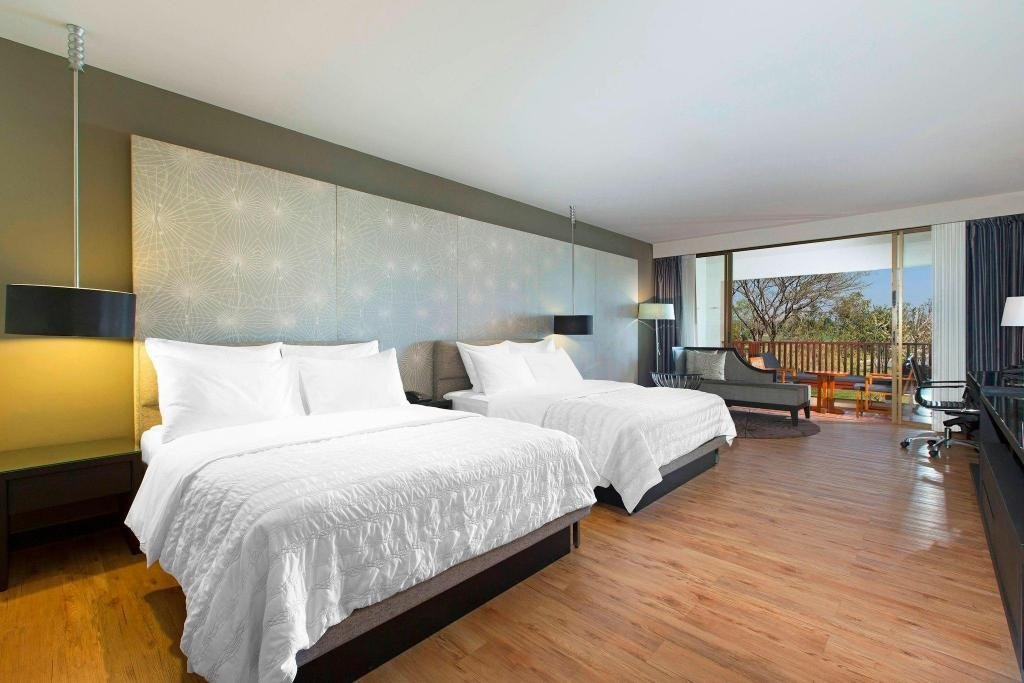
Marriott describes 159 rooms and suites and gives its standard room size as 53 square metres. It lists a deep soaking bathtub and a separate shower in every guestroom, along with balcony space. Those are concrete reasons to choose the hotel beyond its chain name: the bathroom arrangement and outdoor sitting area may matter after a day travelling between temples.
The booking categories distinguish garden, river and pool views. A room with a balcony is not automatically a room looking directly over the river. The view label is the useful selection point if seeing the Kok from the room is central to the stay. Likewise, a ground-level terrace and an upper balcony need not offer the same relationship to the gardens.
Marriott says accessible rooms are limited and should be selected during booking. That is a more precise statement than assuming every large room is accessible. Generous floor space alone does not establish an appropriate shower, doorway or route to the pool for a particular guest.
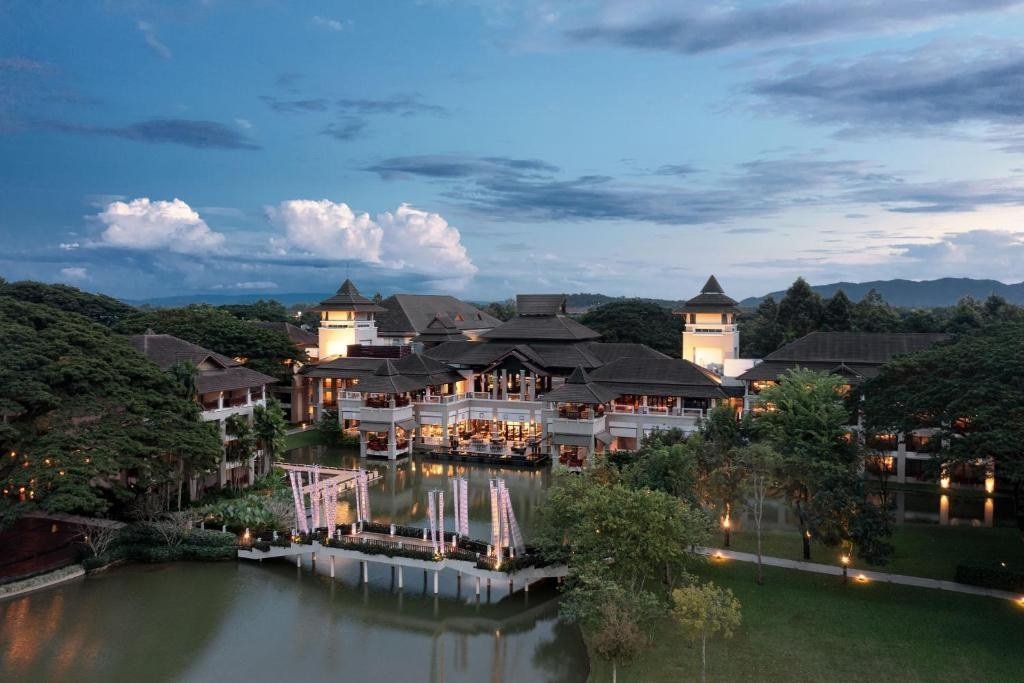
The top-floor suite changes the way a longer stay works
The official room page describes a 132-square-metre one-bedroom suite on the top floor, with a separate bedroom and lounge, dining space, two bathrooms and two balconies overlooking the Kok River. That adds actual separation for time spent in the accommodation. It is a different proposition from a larger sleeping room with a sofa at its end.
The suite’s walk-in wardrobe and separate dressing space also change how luggage and daily use fit around the sleeping area. For a short stay spent out on tours, those additions may be less important than the basic room’s balcony and bath. The category should follow how much time the travellers intend to spend at the resort, rather than the assumption that the largest room always improves a temple itinerary.
Read recent guest praise with the room context attached
An Expedia guest staying in July 2026 received an upgrade to a corner room with a river-facing balcony and praised the room size, firm but comfortable bed and cleanliness. The same guest thought the resort looked somewhat dated and enjoyed the Italian restaurant. The upgrade is part of that individual experience, not something another reservation should expect.
A February 2026 guest liked the grounds and spacious accommodation after previous city-centre stays. A September 2026 guest praised room comfort, the pool and help finding a guide. These accounts support the property’s appeal as a place to spend time, but neither a favourable meal nor a staff recommendation becomes a guarantee of every future service.
The July guest’s package included breakfast and dinner. That detail explains their dining experience; it does not establish that both meals come with every rate. The useful point is the possibility of making the hotel part of the day, rather than repeatedly travelling into town solely because there is nothing to do at the accommodation.
A river resort is still a separate temple departure point
The published address is 221/2 Moo 20 Kwaewai Road in Robwieng, Chiang Rai. Wat Rong Suea Ten is in the Kok River area, while the White Temple lies south of the city. Neither a river view nor the phrase city centre in hotel marketing should erase those separate road journeys.
For a trip built around northern religious art, this property works when the plan combines temple visits with unhurried time at the river. Travellers who want a compact base beside the bazaar may prefer a different city setting. Here the spacious room, balcony and grounds are central to the decision, and deserve time in the itinerary if they are the features being paid for.
Sources for the review
- Marriott — Le Méridien Chiang Rai rooms
- Marriott — property overview
- Expedia — room categories and original guest reviews
Referenced guest accounts include 2026. An individual account describes that guest’s room and stay, rather than every room at the property.