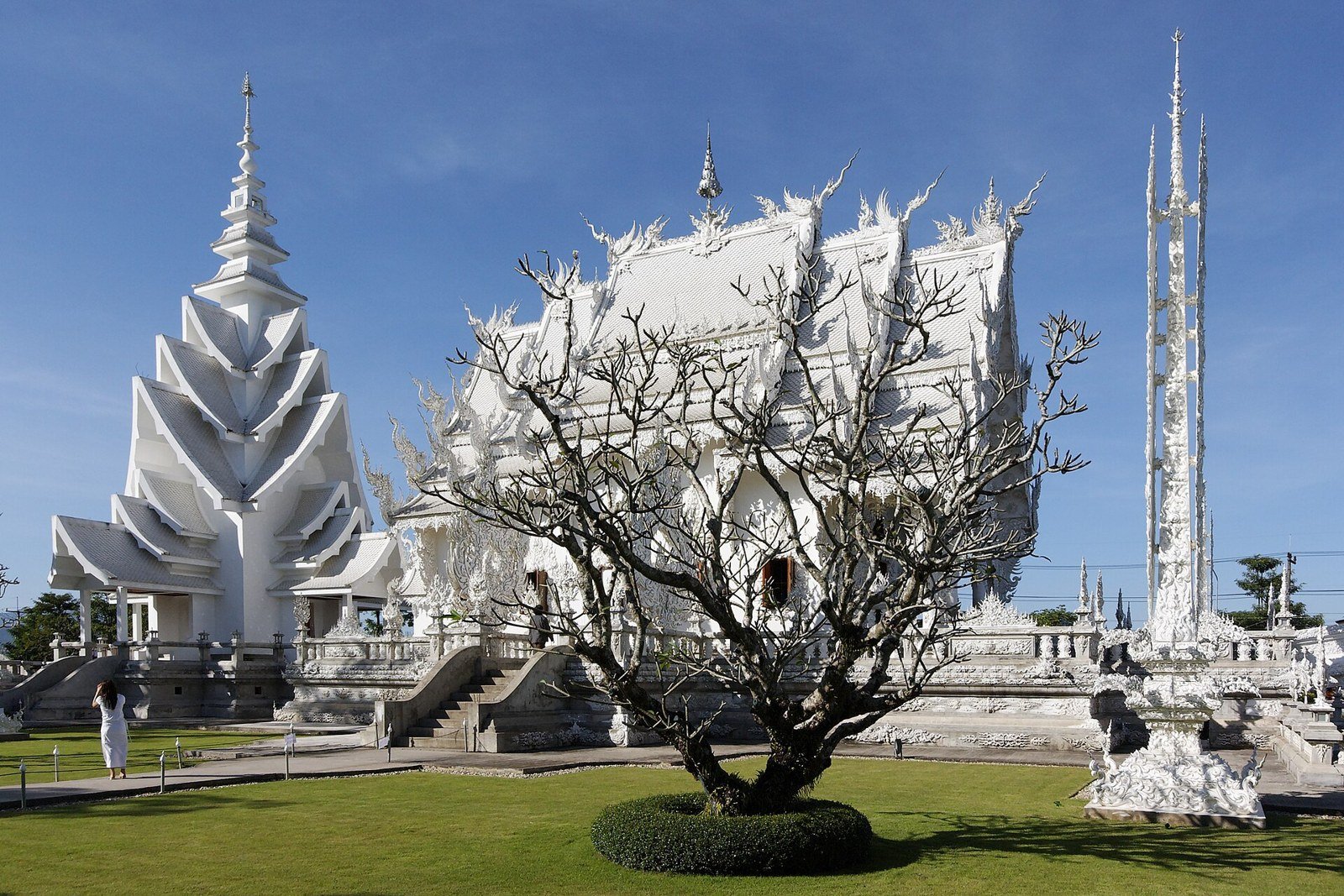
A contemporary project with a village temple behind it
The Chiang Rai Digital Tourism Directory identifies Chalermchai as a native of Rong Khun who took over the rebuilding project when funding ran short during the 1990s. The site had a community temple before the familiar white buildings. That matters when interpreting it: this is an evolving artist-led religious complex, with a local history, rather than an ancient white monument preserved unchanged for centuries.
The large compound contains more than the main hall. The directory records an art gallery, a Ganesh shrine, other religious halls and visitor facilities. Their presence does not mean that every building is included in one ticket or open for every visit. Decide first whether the main temple circuit is your priority, then ask about any separate exhibition you want to see.
Look at the bridge as part of the artwork
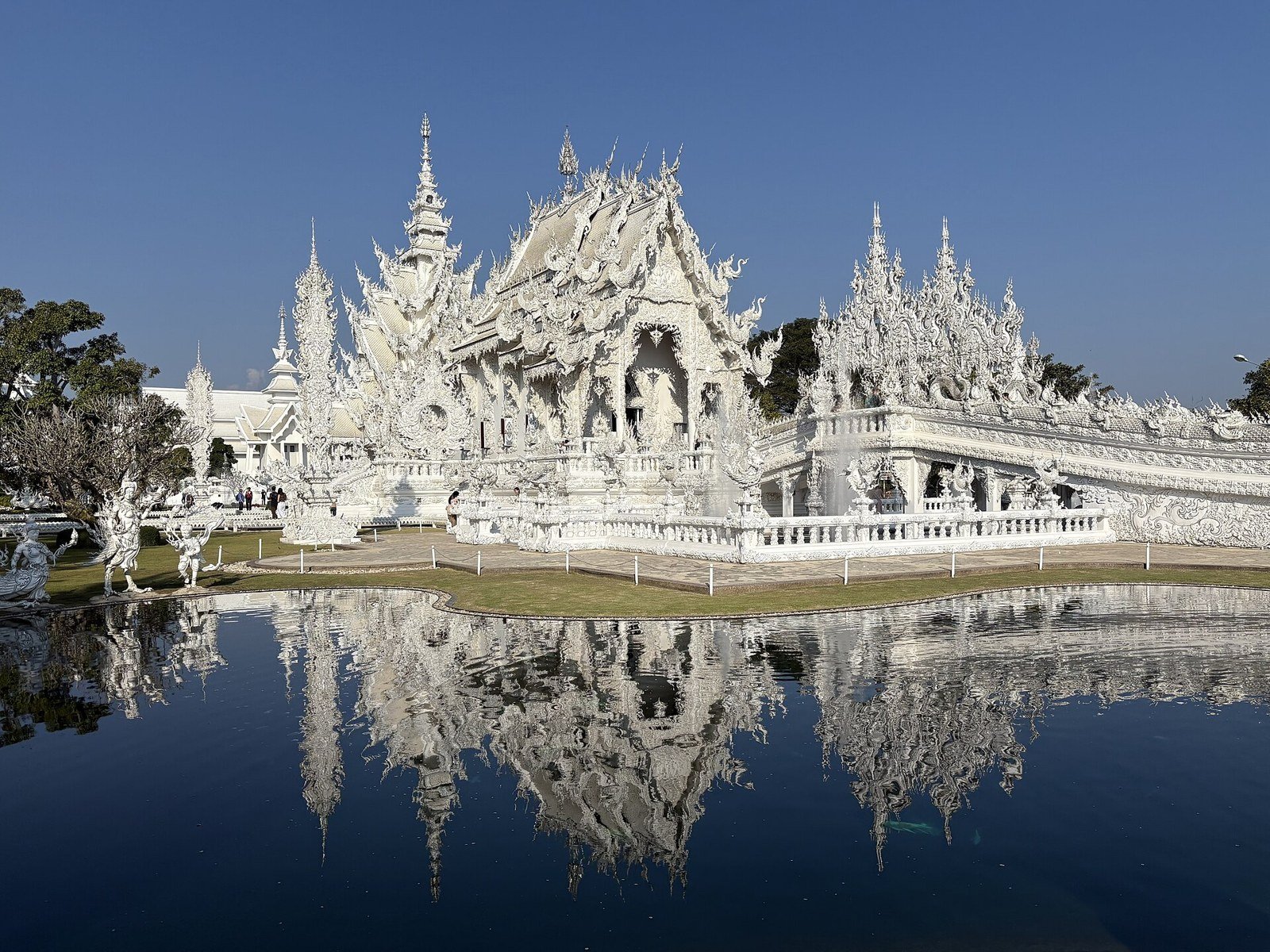
The Department of Tourism describes a bridge leading to the white ordination hall through imagery associated with hell, heaven and Buddhist understanding. The passage is part of the work’s meaning, not simply a convenient place for a photograph. An effective way to look is to take in the whole approach first, then examine the sculptures and mirrored surfaces as the route permits.
The white plaster and small pieces of mirror give the buildings a different visual language from the gold chedis and dark wooden halls of older northern temples. Rather than trying to rank one tradition above another, compare the materials and the way the artist directs attention toward the hall. A photograph of the exterior alone misses that deliberate sequence.
Keep moving where attendants are managing the crossing. A queue is not permission to stand on a narrow passage indefinitely or turn back against the indicated flow. Check the rules at the hall for shoes, clothing and cameras; permission to photograph the exterior does not establish permission inside every religious or exhibition space.
Use the newer admission information
Local reporting of the temple’s January 2026 announcement gives foreign visitor admission as 200 baht per person, including the Cave of Art. The same announcement describes free entry for foreign visitors aged 70 and over and children no taller than 120 centimetres. Confirm the applicable category and what the ticket covers at the counter, especially if a group contains children or older travellers.
This supersedes the impression created by older listings showing no charge. Chiang Rai Times also reports the 200-baht change effective from 1 January 2026 and says Thai nationals continue to enter free. A transport or excursion price is a different charge: ask whether admission is actually included before treating a tour payment as the temple ticket.
TAT’s current Japan-market listing gives hours of 08:00–17:00 and a 200-baht admission price, matching the newer fee information. Use that daytime window for planning, while checking local notices for the intended date. Arriving well before the end of the afternoon is a more workable choice than making the final minutes the centre of a tightly timed transfer.
Make the southern location work for the day
The address is Pa O Don Chai in Mueang Chiang Rai district. The provincial tourism office places it south of the city near Phahonyothin Road. A central Chiang Rai hotel therefore offers an evening base and a starting point for transport; it is not a hotel beside the temple simply because both addresses contain Chiang Rai.
With a hired car or an arranged driver, agree the actual temple name, pickup point and return arrangement. If the trip continues north to Wat Rong Suea Ten, include that separate city crossing in the plan. The Blue Temple is in Rim Kok by the Kok River, on a different side of the urban area. The two can form a considered day, but they are not neighbouring buildings joined by a short footpath.
For an editorial sequence, give Wat Rong Khun the earlier part of the day, return toward Chiang Rai for a break, then visit the Blue Temple if there is time and confirmed access. This leaves the more tightly managed paid circuit first. It is a pacing suggestion, not a published transport timetable or a claim that queues will be absent.
Choose a base for the whole Chiang Rai stay
Central hotels suit travellers who want meals and other city services after returning from the temple journey. A Kok River property makes more sense when the riverside setting and the Blue Temple side of town are priorities. Read the individual hotel’s location carefully; a river view and an address near Wat Rong Khun describe quite different stays.
The main choice is between a focused White Temple visit and an overfilled colour-themed circuit. If contemporary art is the reason for coming, leave room to look at the work and ask about the exhibitions rather than adding distant stops simply because a packaged route lists them. Shoes that are easy to remove and clothing that covers shoulders and knees are practical for continuing between religious buildings.
Sources & visiting information
Sources checked on 29 October 2026. The guide identifies limits or conflicting visiting details where they affect the plan.


