Start with the sculpture, then the hall
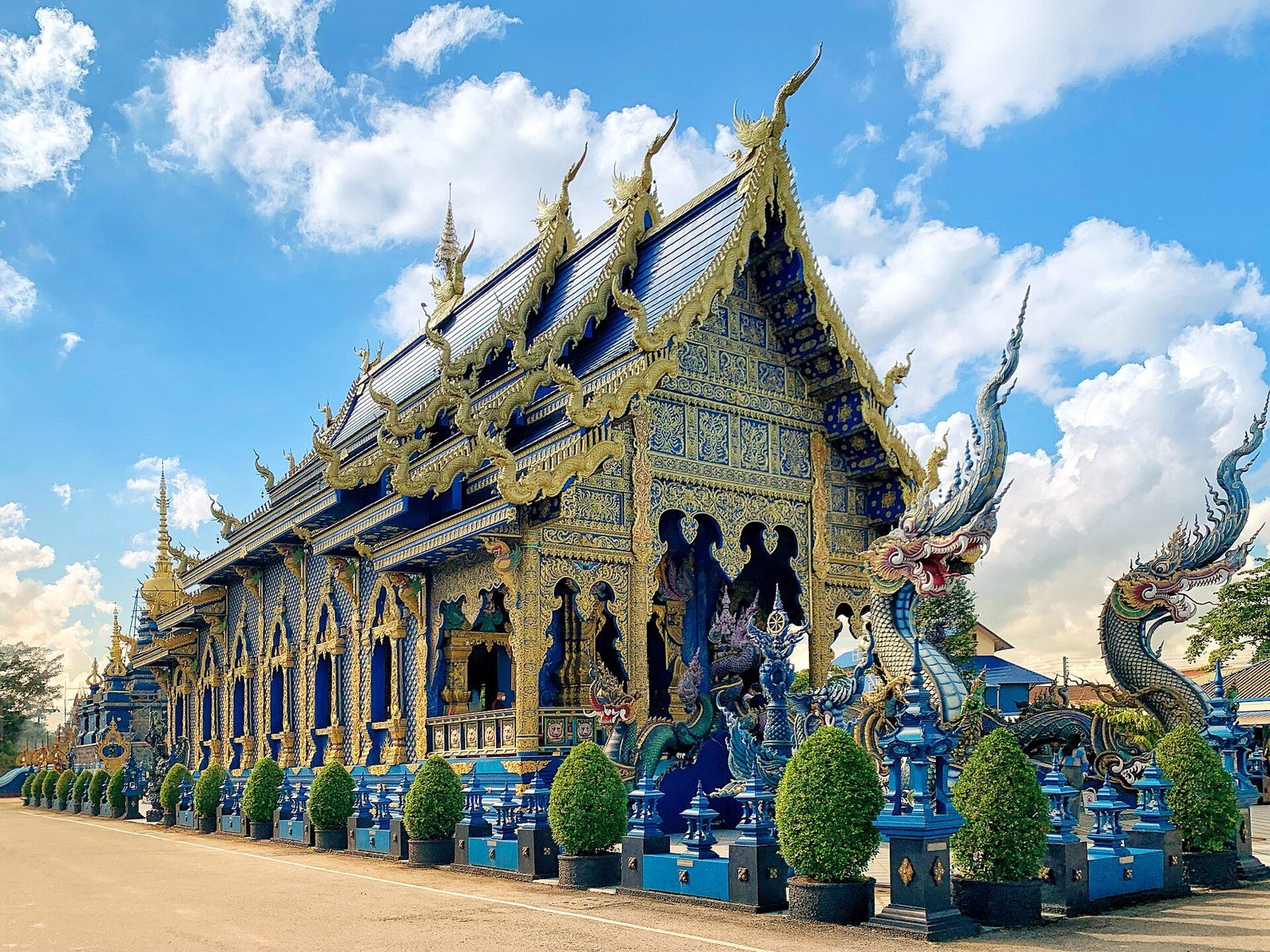
The Tourism Authority of Thailand’s Chiang Rai office describes a modern interpretation of Buddhist art, with blue tones, elaborate stucco and interior paintings of the Buddha’s life. The visual contrast is easiest to understand by looking first at the entrance ornament and then at the white principal image within. The colour is one element of the composition; the shaped surfaces and arrangement of figures matter just as much.
ONEP’s cultural heritage account singles out the naga balustrades and their flowing decoration. These provide a useful detail to examine without reducing the entire visit to one wide-angle exterior. Compare their curves and layered forms with the decoration around the doorway. Keep the steps and threshold clear while doing so, particularly when worshippers are entering.
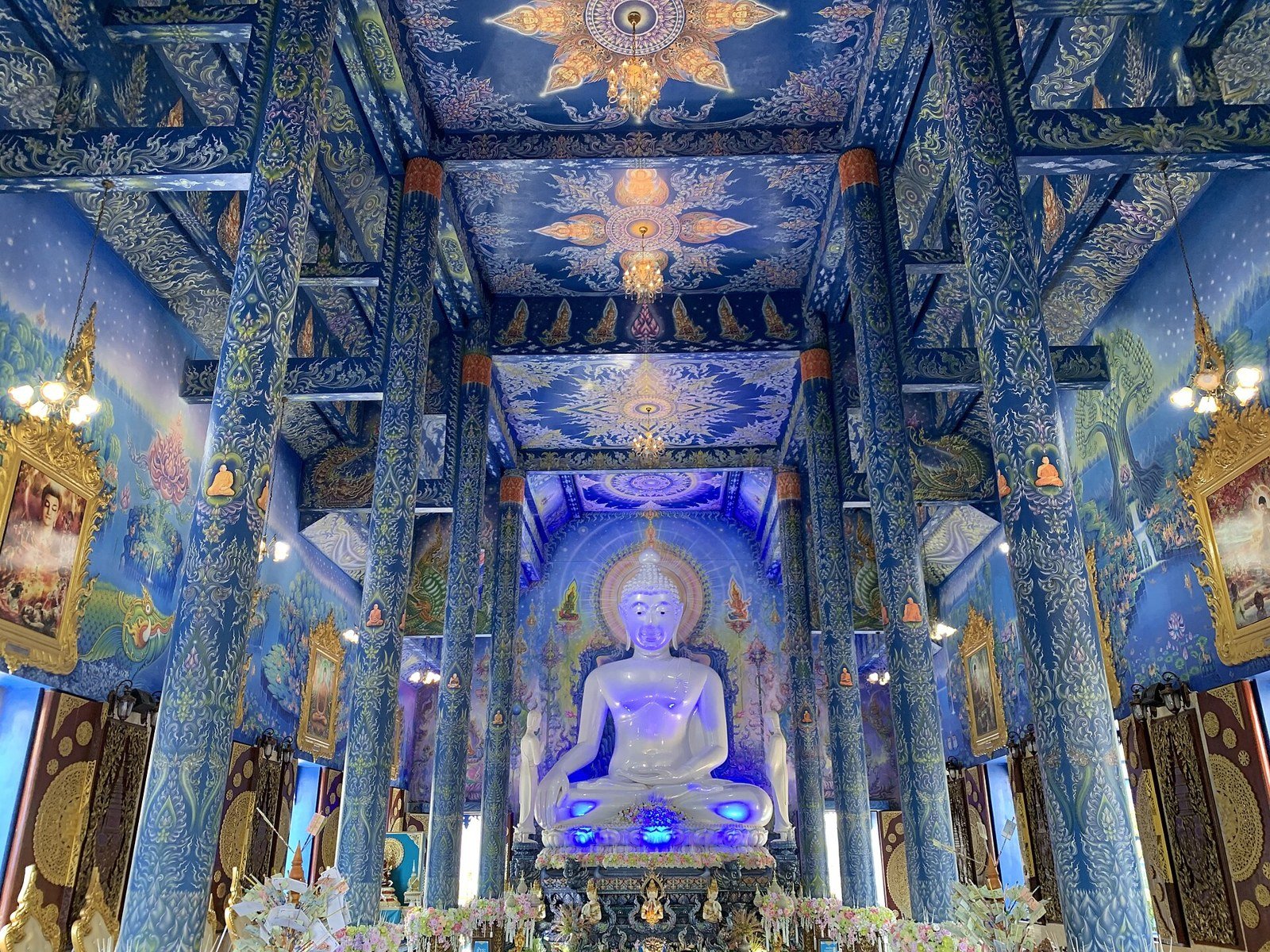
The white seated Buddha is described by the TAT office as 6.5 metres high with a five-metre lap width. Those dimensions refer to the principal image, not to every statue in the compound. Sit or stand where visitors are directed and allow a clear line for people making offerings. A hall used for worship calls for a different pace from an outdoor sculpture park.
Understand who made this newer temple
The designer is the Chiang Rai artist Phuttha Kabkaew, also known as Sala Nok, a pupil of Chalermchai Kositpipat. The Department of Tourism records construction of the main hall beginning in October 2005 and completion in January 2016. This places the familiar blue building in contemporary northern art, even though the community’s religious site has an older story.
The same department explains that residents restored a deserted temple site to create a spiritual centre for the surrounding community. That origin helps explain why this place should not be read only as a tourist attraction copied from the White Temple. The two artists are connected, but the buildings use different colour, imagery and spatial emphasis.
If you are travelling through the north, compare this modern sculptural work with Wat Phra Singh’s older Lanna art in Chiang Mai or Lampang Luang’s wooden halls. Those comparisons can sharpen what you notice here. They are separate city journeys, however, not extra stops that fit automatically into a Chiang Rai afternoon.
Continue beyond the central interior
ONEP also records a large standing white Buddha behind the hall and the rear chedi. These make the back of the compound worth considering when access permits. A simple viewing sequence is the naga approach, the seated Buddha and murals, then the exterior at the rear. It gives each part a purpose without imposing a fixed official circuit.
The Department of Tourism dates and identifies the rear relic monument, but a descriptive account does not guarantee access to every part of it. Follow any barriers or worship arrangements in force. Do not climb onto sculpture bases or assume that an apparently empty passage leads to a public interior.
Look at the murals from a respectful distance. They depict Buddhist subjects within the blue interior rather than serving as decorative backdrops alone. Photography should follow signs and the direction of temple staff; if a ceremony is taking place, wait or leave that section for another opportunity.
Plan a daylight visit without relying on a late closing
Visitor guides commonly describe free admission and a 07:00–20:00 day, but the operating details available from tourism publications are inconsistent. The official heritage and local TAT descriptions used here do not settle a current entrance charge or promise access to the hall after dark. Plan the architectural visit in daylight and check the arrangements displayed at the temple.
That distinction matters if you want an evening photograph: illuminated grounds and an open worship hall are not necessarily the same thing. Do not make an unconfirmed late opening the only chance to visit before an onward bus or flight. Allow the temple visit to move within the day if local religious use changes access.
Wear a top that covers the shoulders and clothing that covers the knees. Remove footwear where instructed before entering the hall. The interior is a religious space, and the bright artwork does not relax the ordinary need to keep voices low and avoid obstructing people at prayer.
Put Rim Kok in the route, not just Chiang Rai
The TAT Chiang Rai office locates the temple by the Kok River and describes an approach from the Mae Chan–Mae Sai road after crossing the river. Use Wat Rong Suea Ten as the destination, not simply a generic Chiang Rai temple search. The White Temple, Wat Rong Khun, is south of the city in Pa O Don Chai and requires a separate road leg.
A central Chiang Rai base works for an out-and-back visit; a hotel in the Kok River area may suit a stay focused on this side of town. Neither label guarantees a walkable route to the gate. Check the property’s actual entrance, road connection and available return transport in its individual review.
For a two-temple day, the useful contrast is artistic as well as geographic: the White Temple’s mirrored white approach and this temple’s blue sculpture and white principal image. Leave time between them for the city transfer and a break. Choose that clear comparison before adding more distant attractions, especially if a long journey from Chiang Mai is already part of the day.
Sources & visiting information
Sources checked on 29 October 2026. The guide identifies limits or conflicting visiting details where they affect the plan.


