Superior and Deluxe do not simply mean small and large
The resort gives both Superior and Deluxe Studios an area of 52 square metres. Superior Studios occupy two-storey buildings containing four or six units, whereas Deluxe Studios are in single-storey buildings with two units each. Moving between those categories changes the building arrangement rather than automatically adding floor space.
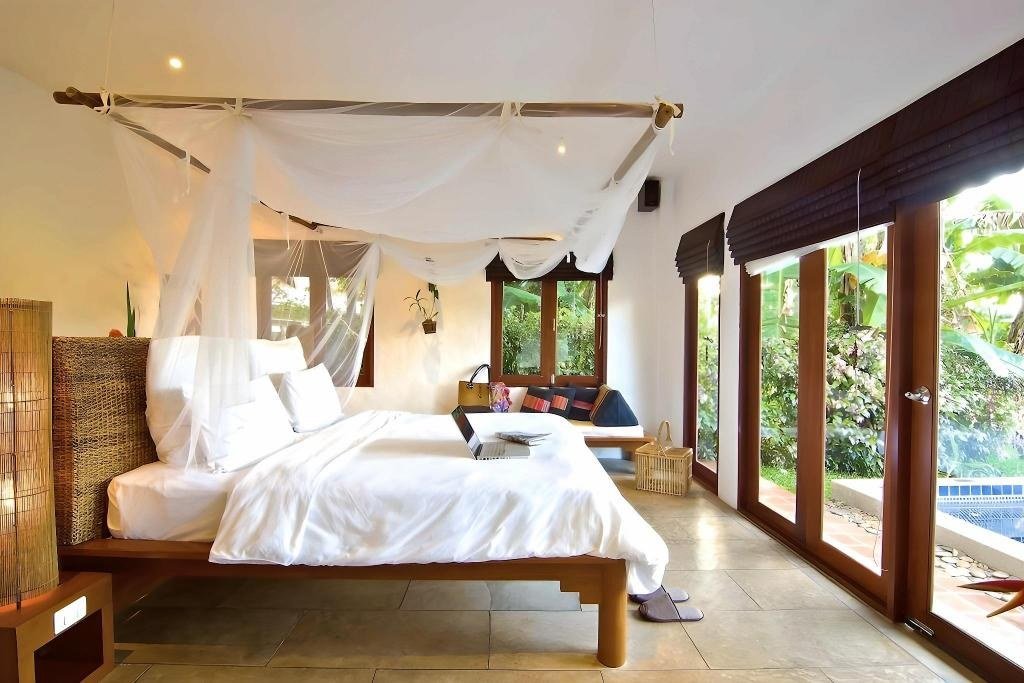
The official Superior description includes a bedroom, an open sala-living space and a tropical semi-outdoor bathroom. The Deluxe description adds its private terrace and a daybed convertible to an extra bed. These are useful differences for a traveller who wants to spend time outside the sleeping area. They should not be read as a promise of a fully enclosed lounge in either category.
The rooms are presented as contemporary Lanna architecture overlooking gardens. If climbing stairs is difficult, the two-storey Superior arrangement needs a specific room-position conversation. Choosing a single-storey category narrows that question but does not itself prove that every path, threshold or bathroom is accessible.
The bigger studio adds a different bathroom
Grand Deluxe Studios are listed at 63 square metres in single-storey buildings with two studios per unit. The resort describes a king bed, a convertible daybed and a semi-outdoor bathroom with a double-size jet bathtub. That is a meaningful upgrade for someone who wants more room and that bathing arrangement, rather than a benefit every guest necessarily needs.
The pool villas are separate categories in the resort’s room collection. A photograph of a private pool therefore should not create the expectation that a Studio includes one. For a temple-focused trip with much of the day spent away, the studio’s sitting space may be the more relevant feature than moving to a villa simply for the higher category.
Recent guests support the garden setting, with personal differences
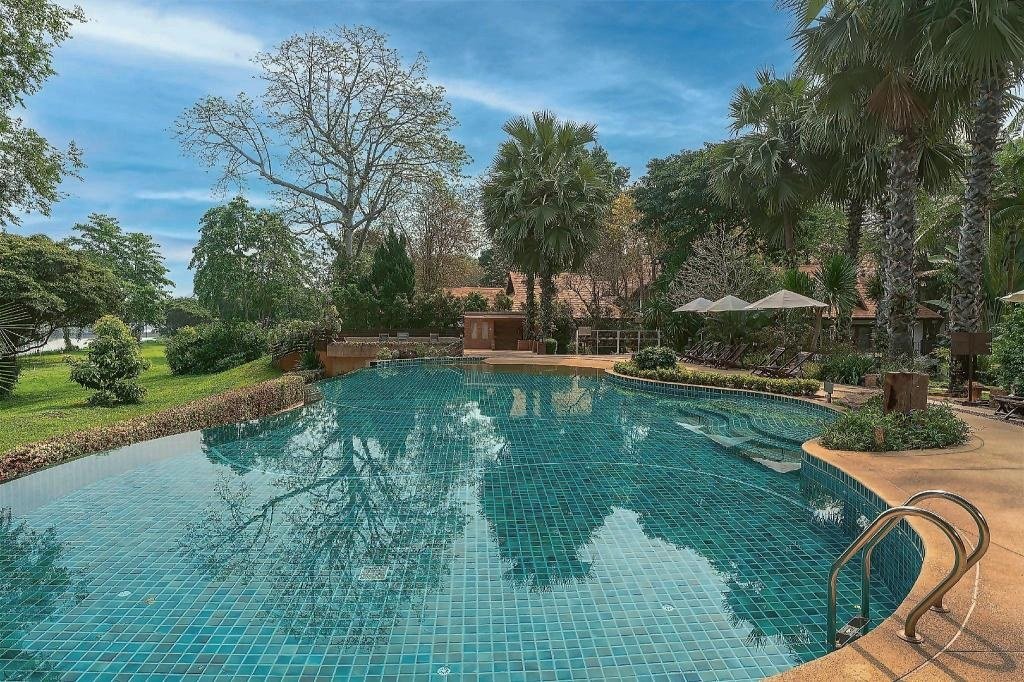
An Expedia guest staying in October 2026 described spacious, quiet garden rooms and appreciated the garden and pool, while also finding the neighbourhood a little isolated from the town centre. A June 2026 guest praised the room and grounds but found the large, firmly filled pillows uncomfortable. These are individual accounts, useful because they identify the actual setting and a specific comfort preference.
The picture is more informative than an undifferentiated claim of luxury. Spacious accommodation does not settle pillow preference, and a quiet garden does not put the night bazaar outside the door. A traveller who values the grounds may accept the city journey more readily than someone who wants to step straight into central restaurants every evening.
The river is part of the hotel, not a temple crossing service
The resort identifies its position on the Mae Kok River and publishes dining and Chiang Saen Spa facilities alongside its accommodation. These give a reason to return between excursions rather than using the property only as a bed. They do not establish that every treatment or meal is included in a room rate.
Wat Rong Suea Ten is in Rim Kok, while Wat Rong Khun is south of the city in Pa O Don Chai. The Legend is a Chiang Rai base for those separate visits, not accommodation at the White Temple gate. Plan the actual road journey for each temple; the river setting should not be mistaken for a scheduled boat connection to either.
The strongest fit is a traveller interested in northern design who also wants a garden and river setting during the stay. Someone who prefers a completely enclosed bathroom and living room should examine the studio layout closely. The semi-outdoor concept is a defining feature here, not a minor detail hidden behind the general room category.
Sources for the review
- The Legend — Superior Studio
- The Legend — Deluxe Studio
- The Legend — Grand Deluxe Studio
- The Legend — accommodation collection
- Expedia — original guest reviews
Referenced guest accounts include 2026. An individual account describes that guest’s room and stay, rather than every room at the property.