Let the gate explain the layout
ONEP’s heritage inventory describes an unusually complete arrangement centred on the chedi. The naga stair leads to a decorated entrance arch, then toward Wihan Luang and the central stupa. That alignment gives the visit a clear starting point: look along the axis before turning into the smaller buildings.
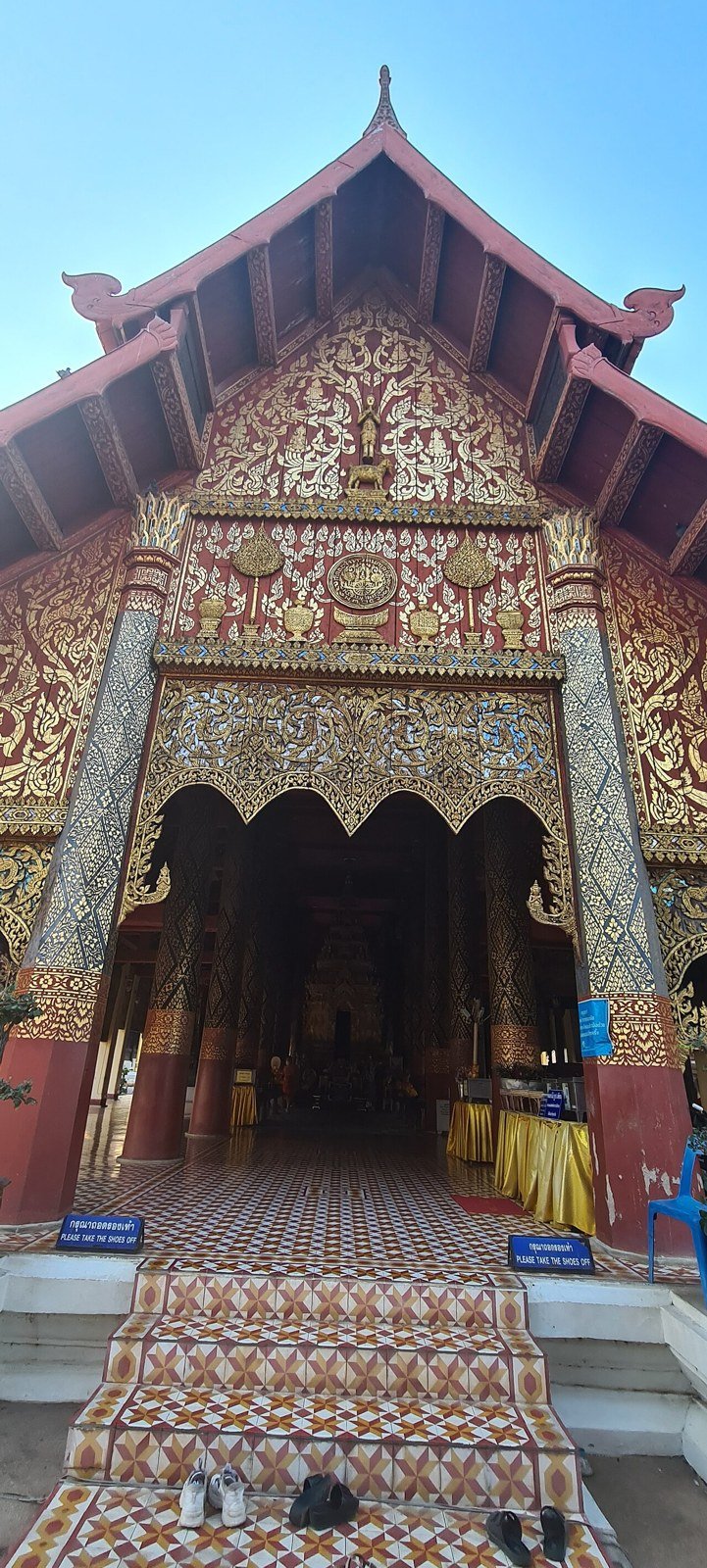
The arch is a brick-and-stucco structure with layered pointed forms and decorative plant and mythical-animal motifs. It is also used as a symbol of Lampang in the provincial seal. Instead of treating the gateway as an obstacle between the car park and the main shrine, pause where you can see it without blocking the stairs and compare it with the roofs beyond.
The raised setting means that an accessible visit needs more planning than the word temple alone suggests. Anyone who cannot use steps should ask specifically about a usable approach to the parts they want to see. A road reaching the compound does not establish a step-free path into the wooden halls.
Look upward inside Wihan Luang
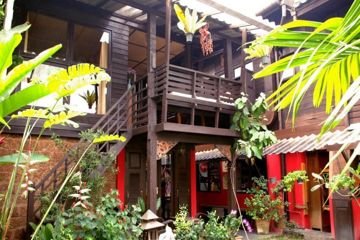
The main hall is an open-sided wooden structure with a tiered roof. ONEP places it on the same line as the entrance and chedi and identifies the gilded shrine of Phra Chao Lan Thong within. The building’s structure is as important to the visit as the principal image: notice how the roof is supported and how the open sides frame the sacred space.
DASTA’s account records old painted stories on the timber panels high inside the hall. They are not modern display boards at reading height. Look without touching the wood or trying to reach a painted surface, and keep worshippers’ access to the image clear. The point is to see the relationship between structure, painting and devotion, not to enter every corner.
This hall provides a useful contrast with Chiang Rai’s contemporary white and blue temples. Here, timber construction and the arrangement of older buildings carry much of the visual interest. That comparison is an art-reading suggestion; it does not imply the temples share a date or a single uninterrupted building history.
The chedi and smaller halls deserve separate attention
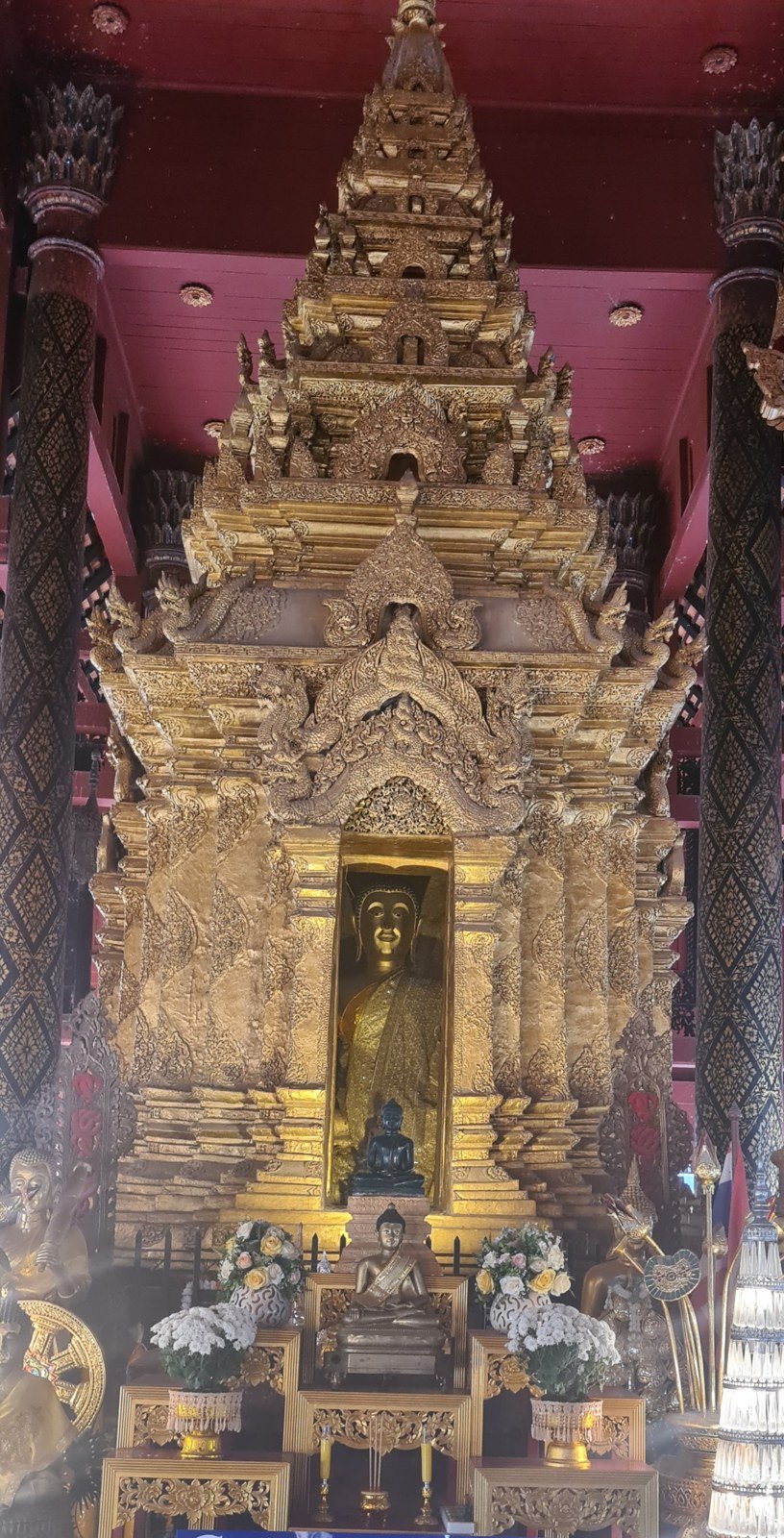
The provincial tourism office describes a Lanna-form chedi clad in metal sheets known as thong changko and identifies the temple with the Year of the Ox. Religious accounts of the relics and foundation are traditions associated with the site, not events a visitor can independently observe. You can appreciate the chedi’s form without presenting every legend as archaeological fact.
Wihan Nam Taem is another reason to slow down. ONEP records an open timber hall north of the chedi with old painted panels, while DASTA notes that the surviving paintings are much faded. This is a visit where patience with fragments can be more useful than expecting a bright, fully restored mural display.
Choose a few features to examine closely: the gate’s stucco, Wihan Luang’s roof structure and the older painting in Nam Taem make a coherent architectural visit. Other shrines and museum holdings can be added if open, but a list of buildings is not evidence that every interior is available that day.
The shadow pavilion has a specific restriction
DASTA and the provincial Public Relations Department describe an inverted image of the chedi and hall visible inside the Phra Bat pavilion. Both also record a restriction excluding women from that particular pavilion. This is a restriction on a named part of the compound, not a statement that women cannot visit Lampang Luang.
Observe the signs at each threshold and choose the other halls if that pavilion is unavailable to you. Do not enter a restricted room merely because someone else is taking photographs there. The broader architectural visit still includes the main hall, chedi, gateway and permitted viewing areas.
The published DASTA visitor window is daily 07:30–17:00, matching the provincial PRD listing. That provides a practical daytime plan, but the opening of a specific shrine or museum may differ from the compound. Ask locally before making a particular interior the sole reason for a late arrival. No current admission tariff is confirmed here.
Separate the city base from the Ko Kha visit
The Lampang Tourism and Sports Office places the temple approximately 18 kilometres southwest of the city. The Sirindhorn Anthropology Centre gives a road approach through Ko Kha and then toward the temple, with parking outside. These are road directions, not a basis for inventing a short walk from a Lampang city hotel.
An arranged car or driver works well when you want to spend time examining the halls and return to town afterwards. Set the return arrangement before leaving the vehicle; do not assume a car that brought another group will be available. A fixed fare or departure frequency is not quoted because no current operator timetable has been verified.
A Lampang city hotel is useful if the wider trip includes the urban riverside and onward transport, while the temple remains a distinct outing. Read each hotel’s neighbourhood and parking information rather than equating a Lampang address with the Ko Kha gate. Give Lampang Luang the main block of the outing instead of using it as a hurried detour between two distant provincial capitals.
Sources & visiting information
Sources checked on 29 October 2026. The guide identifies limits or conflicting visiting details where they affect the plan.