Use the chedi to orient the visit
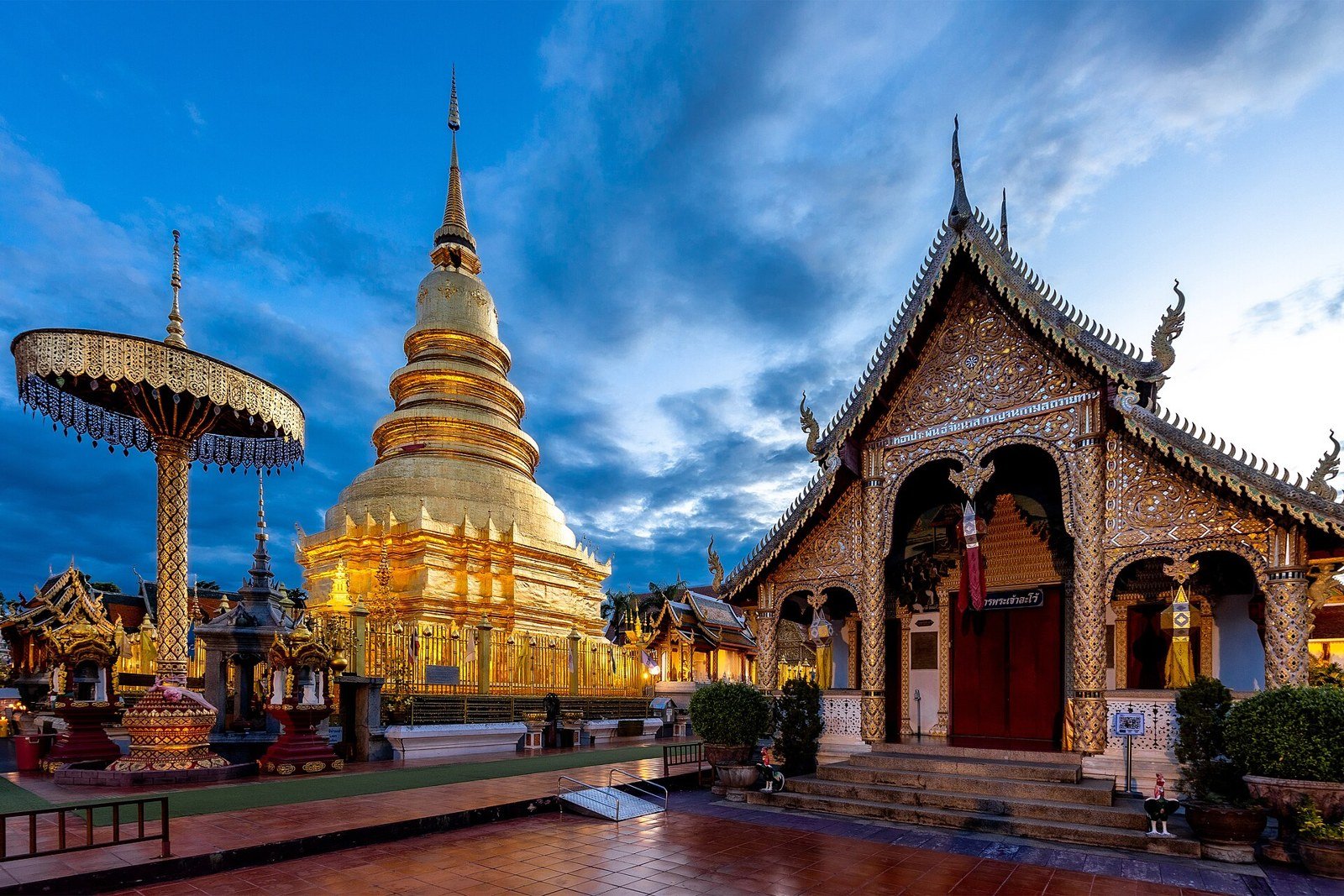
Lamphun’s Provincial Administrative Organisation describes the golden chedi as the temple’s central landmark and points out the stucco lions at the entrance. Begin by locating these two elements, then identify the main hall between the entrance and the central sacred area. This makes the arrangement easier to follow than moving directly from one photographed detail to another.
The provincial government links the monastery’s foundation to King Athitayarat and the former Hariphunchai royal centre. ONEP describes a complex containing architecture from Hariphunchai times through later periods. Read that as a layered site, not as a claim that everything visible today is a thousand years old.
The temple is also associated with the Year of the Rooster in northern devotional practice. That is useful context when seeing visitors pay respect at the chedi. It does not make the space a zodiac-themed exhibition, and the practical priority remains leaving room for worship rather than occupying the main approach for photographs.
Compare the round chedi with Suwan Chedi
TAT’s architectural account places the principal relic chedi behind Wihan Luang and describes its rounded bell form over stepped bases. Look at the change from the base to the curved upper body and the layered elements above. The form offers a meaningful comparison with Doi Suthep’s principal chedi in Chiang Mai, without requiring a claim that the two compounds are identical.
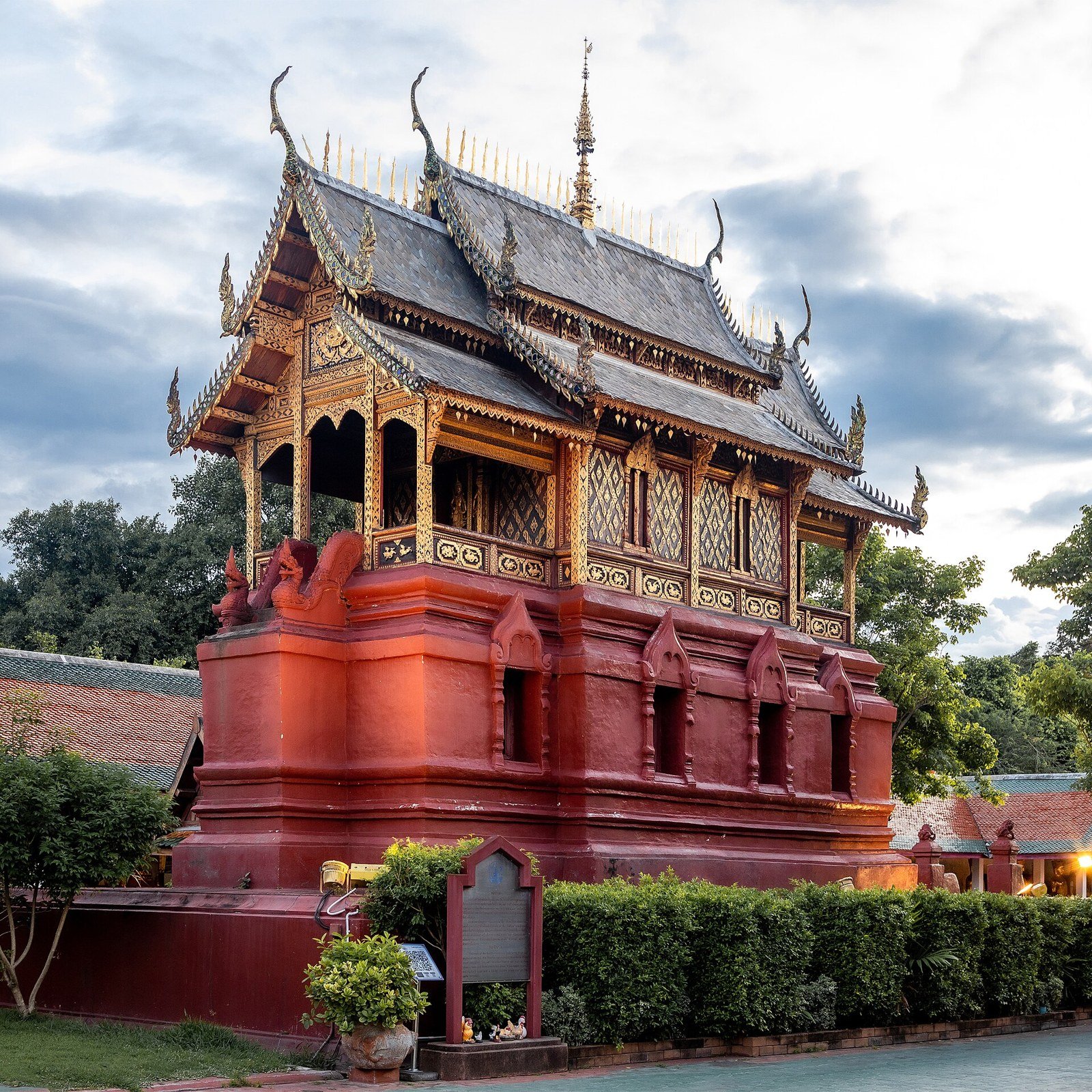
The same account identifies Suwan Chedi, also called Pathumwadi Chedi, as a different monument in the complex. Its square, tiered form and image niches give the visitor another architectural language to compare with the main rounded stupa. Make room for both rather than assuming every gold or brick tower in a temple has the same role.
An effective editorial circuit is to orient at the lion entrance, visit the main hall when permitted, then examine the central chedi and Suwan Chedi from the public paths. Adjust that sequence around ceremonies or barriers. This is a suggested way to look, not an official procession route or a promise that every gate is open.
The main hall is a place of continuing use
The main Wihan Luang houses gilded Buddha images and is used for religious observance. TAT describes the present hall as a replacement for an earlier building, dating to 1915. That helps separate the age of the institution from the age of an individual structure. A famous old temple can contain buildings from very different periods.
Before entering, follow the footwear and clothing instructions displayed at the hall. Keep shoulders and knees covered, and choose a place to sit that does not block people approaching the images. If worship is underway, let that determine whether looking at interior details or taking photographs is appropriate.
ONEP records local traditions including Songkran, alms-related ceremonies and the annual bathing of the relic chedi. These explain why visitor movement may differ on religious occasions. No exact upcoming festival programme or closure is confirmed here; consult the temple’s current announcement if a ceremony is central to the trip.
Opening information does not agree
The Lamphun PAO attraction page lists daily opening 06:00–21:00. The current Thai TAT description gives 06:30–17:00 instead. Without a current temple-issued notice resolving those different windows, neither should be treated as a guarantee that every hall is open late into the evening.
A daylight visit comfortably before 17:00 is the more conservative plan for seeing architecture and entering available halls. If an evening visit is important, confirm access with the temple for that date rather than relying on an attractive night photograph. Grounds access, worship arrangements and an individual building’s opening can be different matters.
No current entrance tariff is established in the local government pages used here. Allow for any posted charge or voluntary donation and distinguish the two at the entrance. A historical guidebook’s fee should not be presented as the current price simply because the temple’s name is unchanged.
Choose Lamphun or Chiang Mai for different reasons
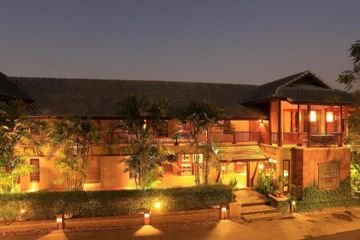
The temple’s central Lamphun position supports a city-based visit. The provincial government places it in Mueang Lamphun, and the PAO’s attraction map identifies the compound in the town. A hotel in central Lamphun can suit a trip focused on the temple and the surrounding urban heritage; check its actual street connection rather than only the province label.
Chiang Mai is a different base, useful for visitors also seeing Wat Phra Singh, Wat Chedi Luang or Doi Suthep. Coming from there adds a separate intercity journey and a local arrival leg in Lamphun. A Chiang Mai hotel review should not imply that Hariphunchai is part of its walkable temple neighbourhood.
For an editorial day plan, give Hariphunchai a clear morning or afternoon block and keep the rest of Lamphun flexible. Trying to combine it with several Chiang Mai interiors and a mountain temple in one tightly timed day reduces the attention available for each. The main decision is whether Lamphun is a short excursion or a place to stay overnight, not how many temple names can fit on a route list.
Sources & visiting information
Sources checked on 29 October 2026. The guide identifies limits or conflicting visiting details where they affect the plan.